
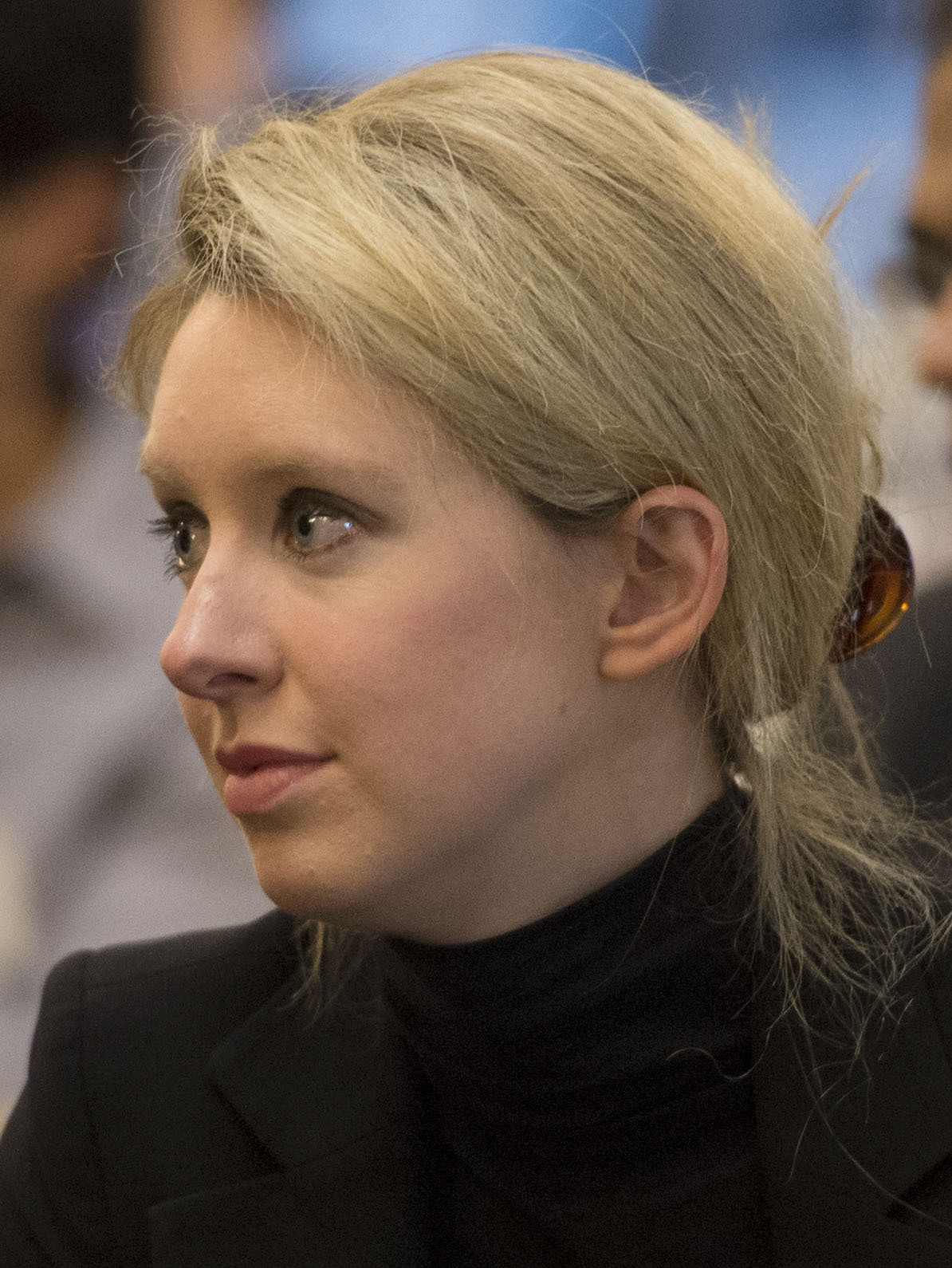
When we were raising investment for PowerSphyr in 2016, potential investors regularly brought up Elizabeth Holmes and Theranos. Their reluctance was almost palpable. I encountered it in conversations with automotive investors, people from tier-one suppliers and OEMs, and investors connected with Y Combinator. We were discussing entirely different technology, but the loss of trust was entering our meetings too.
These were people considering investments in technology they did not necessarily understand themselves. That is a normal part of investing in new companies. A founder may spend years working through a technical problem that an investor has only recently encountered. The investor needs a way to evaluate the claim without having to become the engineer who built it.
What I saw was how another company's promises could make that relationship harder. I believe Theranos damaged confidence well beyond its own investors and made it more difficult for some legitimate companies to earn trust. That is why the consequences of Theranos still matter to me as a founder.
The claims behind the personality
The timing matters. The major reporting that challenged Theranos began in October 2015. In January 2016, CMS notified the company of laboratory deficiencies posing immediate jeopardy to patient health and safety, a finding documented in the subsequent federal court record. Those events were unfolding while we were having our own investment discussions.
Holmes was convincing, and the company had extraordinary momentum. But the important diligence question was whether its technology could do what investors were being told it could do. Confidence in a founder cannot answer that question by itself.
The Ninth Circuit's account of the evidence describes demonstrations in which devices ran a “null protocol,” while some samples were tested elsewhere. It also describes pharmaceutical-company logos being placed on reports and testimony contradicting the impression that those companies had validated the technology.
That is why independent assessment has to follow the complete process, from the input to the result. What equipment performed the work? Under what conditions? What happened to failed samples? Who produced the validation report, and what did that organization actually evaluate?
Some technical scrutiny did occur. Pfizer's diligence is part of the record. It would be inaccurate to say nobody asked questions. The failure was that significant capital continued to flow despite inadequately verified core claims and misleading representations about the evidence supporting them.
A patent cannot carry the whole investment case
In technology fundraising, patents can become a shortcut for credibility. They are important, but investors need to understand what they establish.
I am the author of multiple patents, so I value the work and intellectual property they represent. A patent still does not independently demonstrate that a marketed product achieves a particular performance level or can become a viable business.
Patent law requires credible utility and sufficient disclosure for a skilled person to make and use the claimed invention without undue experimentation. It does not ordinarily require a working prototype. The USPTO's guidance expressly recognizes that an invention need not have been physically made before filing and permits appropriately presented prophetic examples. USPTO enablement guidance
An investor still needs evidence about the product being offered. Does it perform as advertised? Can it be manufactured reliably at commercial scale? What does it cost to produce and operate? Does the actual configuration comply with applicable regulations?
Those are separate questions with separate evidence. Counting patents does not resolve them.
Physics is only one part of feasibility
A lot of things are possible in physics. Turning them into useful products requires more than establishing that a physical effect exists.
In wireless power, an investor needs to know how much usable power reaches the receiver, at what distance, with what antenna and orientation, and under what operating restrictions. A demonstration under favorable conditions may tell you something important. It may still tell you very little about the product a customer will use.
Energous provides a useful example of why the scope of a claim and the scope of an approval need to be compared carefully. Its 2015 disclosures reported prototype testing with watt-level power delivery at distances up to 15 feet. The Miniature WattUp approval announced in May 2016 covered a contact-based, low-power charging design. The Mid Field approval announced in December 2017 concerned a configuration with a charging range of up to three feet.
Energous disclosed those distinctions. I am not presenting those approvals as evidence of fraud or equating its conduct with Theranos. The point is that approval of one configuration does not validate every performance claim associated with a broader technology platform.
The same discipline applies to software. An AI product may perform well in a demonstration while requiring substantial human review in ordinary use. A platform may work at its current workload but fail at the scale assumed in the investment plan. The practical limits, costs and dependencies belong in the assessment alongside the technology's potential.
Independent technical assessments should support informed risk taking
Investing in ambitious technology has always involved risk. I do not want the lesson of Theranos to be that investors should retreat from anything unfamiliar. That response can penalize the founders building something real.
An independent technical assessment gives investors a better basis for deciding which risks to take. It should identify the claims that materially affect the investment, examine the evidence behind them and explain the implications in language the decision-maker can use.
Sometimes that leads to a clear recommendation not to proceed on the stated technical claims. Sometimes the technology supports proceeding, with a defined condition before further expansion. A useful assessment should make that distinction, rather than leave the investor with an impressive-looking document and no conclusion.
That is the work we are building Athelguard around. We examine technical claims, feasibility and implementation risks, then provide a written assessment of what the evidence supports. The purpose is to help investors distinguish credible technology from smoke and mirrors and understand the conditions under which an opportunity makes sense.
No assessment can remove every risk or guarantee a return. It can make the technical basis of a decision clearer. After seeing the reluctance that Theranos brought into our own fundraising conversations, I believe that clarity matters for both sides: investors who want to back real innovation, and founders who deserve a fair examination of what they have built.

Related Posts

A Vendor Risk Score Needs a Business Scenario

Bridging the Gap Between Founders and Investors